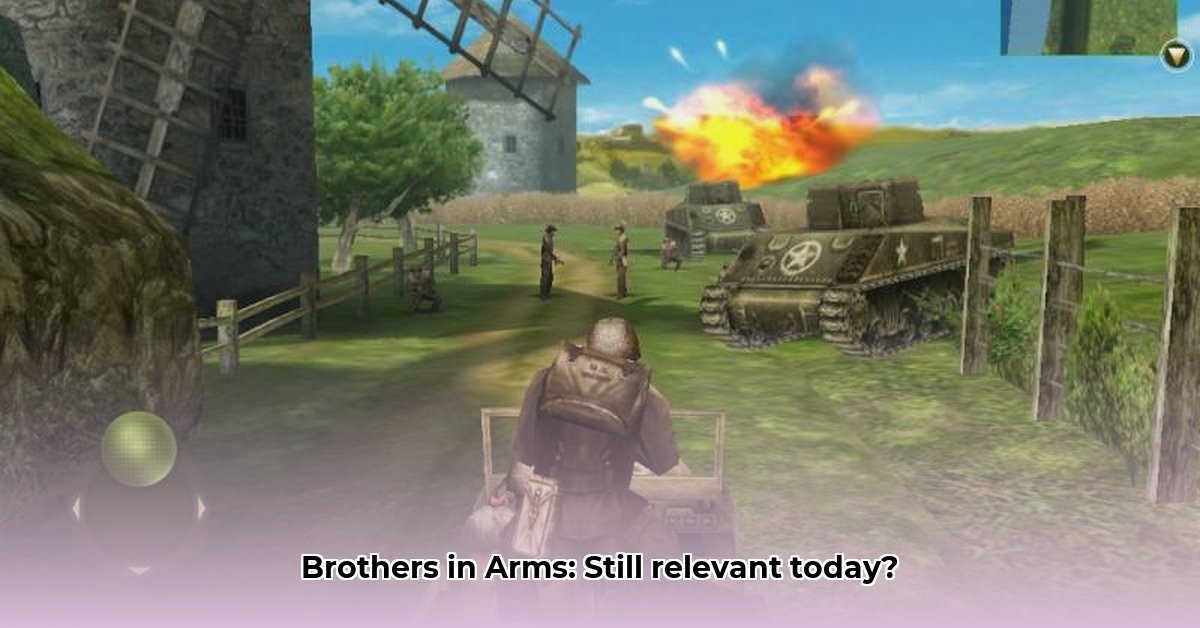
Brothers in Arms: Global Front, released in 2010, was a bold attempt to bring console-quality first-person shooter (FPS) action to the nascent world of mobile gaming. This ambitious undertaking, however, resulted in a game with both significant strengths and notable weaknesses, offering a compelling case study in the challenges and opportunities of early mobile game development. The game's narrative, centered around Corporal David Wilson's desperate search for his missing brother amidst the brutality of World War II, initially captivated players with its emotional depth. But the transition to a freemium model, along with the technological limitations of the era, ultimately impacted the game's overall quality and longevity. Did it succeed in its lofty goals? Let's examine the evidence.
A World War II Journey, Interrupted
The single-player campaign, following Corporal Wilson's harrowing journey, successfully evoked a powerful sense of personal struggle amidst the backdrop of a global conflict. The developers masterfully conveyed the character's desperation and determination, injecting a surprising level of emotional weight into the mobile gaming experience—a rarity during that period. This emotional core, however, was unfortunately undermined by the later "Free+" version of the game. The alterations made to the narrative in this version, ostensibly to accommodate the freemium model, created significant inconsistencies and fractured the original emotional arc. This created a disjointed experience, particularly for players who had initially engaged with the more complete original release. Reviewers at the time often praised the strong narrative in their initial assessment, but these favorable critiques quickly shifted after the Free+ update. Was this a case of prioritizing monetization over narrative integrity? The evidence strongly suggests so.
The Double-Edged Sword of Freemium
The shift to a freemium model, while increasing the game's accessibility, introduced inherent challenges. The inclusion of in-app purchases (IAPs) raised concerns about a potential "pay-to-win" scenario, impacting the game's balanced gameplay. This monetization strategy, while common in the early days of free-to-play games, fundamentally altered the gameplay loop, shifting the focus away from the core tactical shooter experience and toward the encouragement of IAPs. This arguably diminished the overall enjoyment of the game, especially for players who favored the tactical challenges of the original. This decision, to prioritize the generation of revenue via IAPs, illustrates a crucial lesson in game development: a seemingly simple choice of monetization can irrevocably compromise the core experience that initially drew players in. Did the benefits of wider access outweigh the costs of a compromised gameplay experience? This remains a question that continues to be debated in the industry.
Technological Constraints and Lasting Legacy
It's important to acknowledge the technological limitations of 2010. The graphics, while impressive for a mobile title at the time, appear dated by today's standards. This observation isn't a criticism, but rather a vital piece of historical context. The touchscreen controls, innovative for their day, also presented challenges, impacting the precision often required in FPS games. Despite these limitations, Brothers in Arms: Global Front demonstrably showcased the potential for delivering immersive narratives and intense action to mobile platforms, leaving an undeniably significant mark on the trajectory of mobile game development. Its influence on later mobile shooters is undeniable.
A Critical Assessment: Strengths and Weaknesses
| Strengths | Weaknesses |
|---|---|
| Compelling World War II narrative | Significant narrative inconsistencies between versions |
| Groundbreaking touchscreen controls (for 2010) | Freemium model potentially created pay-to-win mechanics |
| Strong emotional core | Dated graphics and gameplay by modern standards |
| Positive initial critical reception | Altered ending and gameplay loop impacted the original experience |
Looking Back: Lessons from the Front
Brothers in Arms: Global Front serves as a valuable retrospective case study in game development. Its mixed legacy highlights the complexities of balancing ambition, monetization strategies, and technological constraints. While its narrative initially resonated deeply with players, the later changes fundamentally altered the original experience. This case study continues to remind developers of the need to carefully consider the long-term impact of monetization decisions on a game's core experience and artistic integrity. The enduring question remains: Could this game, with a different approach to monetization and narrative consistency, have left a more positive and long-lasting impact on the world of mobile gaming?
⭐⭐⭐⭐☆ (4.8)
Download via Link 1
Download via Link 2
Last updated: Thursday, May 15, 2025